Today, there are thousands of companies all selling training and certification services. What’s more, not all of them strictly fall into the eLearning industry category. Many are just regular firms that happen to have in-depth knowledge of a particular subject and want to share with others.
Marketing eLearning training can be a challenge. Going from initial touchpoint to sale is often a long and arduous process taking many months.
Many companies, therefore, are turning to the humble webinar to promote their training options. They’re finding that it is an effective way to promote their services.
Businesses use webinars for a host of topics. One of the most popular is employee engagement: trying to get their workers more excited about what they’re doing, reducing passivity.
A lot of webinars are on employee training: that is, how companies should train their people and the benefits of doing so.
Some businesses also use their webinars as an opportunity to engage in a spot of microlearning, providing prospects with a sample of what their final services might be like.
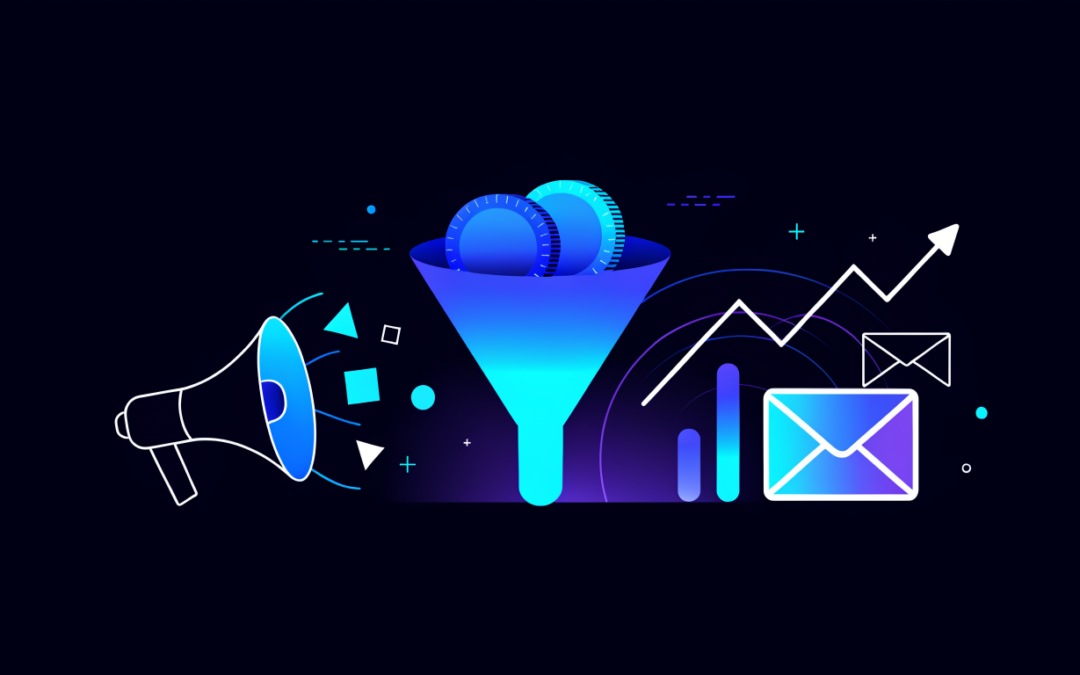
Webinars, however, are about more than just providing information - they’re also a pivotal opportunity to overcome customer sticking points and make a sale. The ROI statistics are impressive. Around 60 percent of marketers in the eLearning space use webinars as part of their marketing strategy, with between 20 and 40 percent of viewers turning into qualified leads.
Do you sell training services over the internet? Would you like you to find out more about the effectiveness of webinars for marketing your services? Then check out the following infographic for more details.
Advertising is everywhere. When we turn on any of the screens that we use constantly in our daily lives, it is there. On our TVs in the form of commercial breaks and product placement within movies and TV shows, through to our phones and our laptops where every webpage we open will have several ads placed throughout.
You are potentially exposed to thousands of ads each day. Many of these you will not even notice. We can very often develop ad blindness, overexposed to constant messages, and many of which bare little relevance to our lives.
If you run a business and are wanting to place the type of advert that is less likely to get overlooked and is more likely to land on the screen of someone who will have use for it, then programmatic advertising may be for you.
What Is Programmatic Advertising?
Simply put, programmatic advertising is a form of advertisement that is automatically targetted toward relevant people. Ads are bought automatically and are then placed using complicated and evolved algorithms. The ads can appear at the times that the specific individuals for whom they are aimed will be online and can be targetted for the type of device that they are most likely to use.
Programmatic advertising is adaptable and is capable of learning and tweaking your advertising campaign as it sees fit in order to maximize your overall marketing goals.
What Data Does Programmatic Advertising Use?
Using key demographics and other information such as personal interests and browsing and shopping habits, it is possible to get a clear understanding of what types of products and offers will appeal to a certain person.
This data can be obtained by your company directly, and you can use data from companies with whom you share synergy in order to provide complimentarily product offerings. In addition to this, third-party datasets can be bought, however, the effectiveness of this information may not be as good as with the first and second party sets.
Managing And Adapting Your Campaign
As with any form of campaign, you’ll be looking for a marketing dashboard to provide your performance data. Understanding how an ad campaign is performing is essential as it lets you know whether your eggs are in the right basket.
The beauty of programmatic advertising is that algorithms manage your ad buys as they go meaning that they are always learning from the way that users have interacted with the ads previously.
Adaptability
In any form of marketing, it can be useful to run A/B testing to compare and contrast different concepts in order to see where your strengths and weakness lay in each idea. These tests can be shown to different audiences with similar backgrounds, and the way that the ads are interacted with can indicate a preference for one of the options. This can then automatically be substitute for the remainder of the campaign. This will then lead you to a much greater degree of success.
There is no denying that social media has grown to become an integral part of everyone’s social life today. Facebook, Twitter, and Instagram, for example, are now immensely popular amongst both the millennials and the older generation. Coincidentally or otherwise, cases of mental disorders among young adults appear to increase with the increase of social media popularity. Well, we cannot authoritatively say that the two stats are correlated, but we cannot turn a blind eye either of them. That is why we are focusing on 6 possible relationships between social media and mental health, 3 being positive and 3 negative.
3 Positive Effects of Social Media on Your Mental Health
Social media helps us to find answers to problems that affect us, share our stories with people who are or who have been in the same situation as we are in, and to make new contacts. Of course, social media is filled with people who understand and share our struggles, who are willing to be part of our support system. This is both inspiring and empowering, and has a spiral effect of an individual’s improved mental health. Here is the evidence:
1.Fostering a sense of belonging
Social media is one large and welcoming community that gives every user some strong sense of belonging. Social media groups, for example, are formed by individuals who share a common belief, profession, or life challenge. That makes each member feel like they are an important part of a community.
How does this benefit your mental health? Well, according to a 1999 scientific study by the School of Nursing at the University of Michigan, a strong psychological sense of belonging can help you overcome depression and other mental health problems.
2.A repository of your fond memories
Social media has grown to become the repository of most people’s fondest memories. As a matter of fact, social media is the main motivation behind most photos nowadays. Answer this as truthfully as possible: Would you be taking as many pictures as you do now if you weren’t on social media? Most likely, no!
The Instagram pictures you posted after a happy event, for example, will always be a constant reminder of your exciting past. If you are stressed or anxious prior to an interview, going through photos of your graduation on Facebook, for example, can help you relax and regain your lost self-belief. According to study findings published in nature.com on January 2019, positive memory reduces your chances of suffering depression and significantly boosts your mental health.
3.Enhancing better self-expression
When youths engage with one another on social media, they gain basic social and technical skills that help them to express themselves better and with more clarity. A guy who is attracted to a girl, for example, will have an easier time expressing his interest in the girl via social media chats than in face-to-face interaction. This form of self-expression wasn’t available before social media.
3 Negative Effects of Social Media on Your Mental Health
Cases of cyberbullying and social media trolls have been cited before as a cause of depression and a feeling of self-worthlessness amongst young people. There are also psychologists who argue that chronic sleep deprivation that social media users have can be detrimental to their health. Here are 3 more destructive aspects of social media in regards to your mental health:
1.Toxic comparison can lead to depression
A recent study that was published in a popular medical journal revealed that comparing your life with other people online can lead to depression, regardless of whether you are doing better than them or not. And with millions of photos being posted on social media on a daily basis, you cannot help but compare your life to your friends as you scroll through your social media feeds. There have been numerous cases reporting to these issues, however, if you are struggling with depression, approaching an experienced life coach would help you find clarity and solve the problem.
2.Social isolation
Brian Primack and other researchers at the University Of Pittsburgh School Of Medicine recently found out that overusing social media can leave you feeling socially-disconnected from the real world. This form of social isolation leads to depression and when unattended for long, encourages suicidal thoughts. That is according to a separate study by the Association for Psychological Science.
3.Social media is addictive
Internet and particularly social media addiction is real. ‘Facebook Addiction Disorder’ is very common nowadays; it causes mental preoccupation that can promote feelings of anxiety when the addicted individual stops using Facebook.
Turning a good idea into a successful business is what startups are all about. We love the idea of a startup because the potential is limitless, but we also love it because of how difficult it is to build a successful startup. Simply put, it’s a huge challenge that offers big rewards.
Naturally, faced with such a challenge, new startups want to make wise investments with their cash, but what are the areas these companies can look to save money?
Streamline Marketing
In today’s world, it doesn’t cost all that much to be able to reach your ideal clients with your marketing. Small budgets can go a long way, but only if you’re innovative and embrace modern marketing.
When you’re looking to invest in the cornerstone of your marketing efforts, then a prime candidate is your website. Whatever industry you’re in, your website is going to set the tone for how your clients view your company and what they come to expect from you.
A high-quality website is a perfect way to start to build trust between you and your clients, and it brings together all your marketing efforts. In many ways, your website is like your storefront in the modern world, and it’s got to look appealing to your clients.
Focus on What You’re Good At
A common difficulty for startups is that they get sucked into doing things they’re not necessarily good at when they don’t need to. Thanks to modern technology, it’s easier than ever to outsource the things you’re not good at and give you more time to focus on the things that are going to make you money.
You don’t have to be able to do everything well to be a successful company, it can be more beneficial to focus on the things you do well and allow other people to take care of the things you don’t do so well.
Don’t be afraid to outsource and take advantage of other peoples’ talents.
Get the Right Software
In order to stand out from the crowd, you’ve got to be able to do your best work and you can’t do that if you don’t have the right software.
It can be tempting to make do with lesser software and save some money at the beginning, but invariably you find it costs you more through inefficiencies in the long run. Your software is integral to your ability to do business efficiently, so make sure you’ve got a good provider like www.bytes.co.uk.
Hire Smart
They say that “you’re only as good as the team around you,” and that’s true, but it doesn’t mean you have to break the bank and get the most expensive employees.
A startup is about innovation and achieving dreams, so find employees who share these feelings. There are talented people at all ends of the experience scale, so find the employees that share your goals and want to grow with your company.
Your employees are going to have a huge say on the direction and success of your company so make it a priority to get the right people in to help you.
Well if you ever struck with an idea to start your own web development business, then believe us now is a perfect time and opportunity for you. In this modern world with thousands of businesses, companies, and industries are moving online towards a more preferred and efficient form of doing business. Nowadays zero sectors prefer operating offline, on the contrary, everything is being cut back and moving towards what we call the online market. This may be the reason why there has been a huge increase in outsourcing development and the demand of web developers.
For a business, basic things like digital marketing, social media marketing, interactive websites are essential to function. However most small to medium-sized businesses don’t have a full-time position for this skill set. That’s where you come in to fill the void for these companies especially the one looking for web development services. And once you set foot in this business you can expand your product and services that you offer accordingly. However, it’s not an easy task, well no worries as we are here with the perfect 7 Things You Need to Know to Start Your Own Web Development Small Business.
Target Your Market
The very step to your web design business plan should be identifying your target market. It’s not that difficult just answer a simple question and that is “Who do you want to work with?”.
One of the biggest mistake that most of the beginners make in their prior web development plan is that they want to work with everyone. Well, this is something you would absolutely want to avoid because if you are doing that you are not appealing to the specific needs of one particular business type. So the best piece of advice for a beginner would be to pick up some group of the market initially. For instance, if you are really good at handling commercial websites then stick to it for starter and then expand slowly.
Pick Up A Niche
Like we said before, it’s stupid to even think that you can work in every domain of web development business. It always best to pick up an industry that you are interested in and that you would like to work with. Well if you are unable to attract clients then consider offering your services for free or for a reduced cost to build your portfolio and to get a recommendation in your niche. It is always recommended to start with a local community and build trust with your clients.
Target Clones Of Your Best Clients
Once you have gained experience in working with different business owners or somebody in a particular industry. You will start to identify traits of good clients and bad clients, clients who are beneficial for your web development business and who are not. Well, when you start to feel this way its time for you to change your strategy and start targeting clones of your best clients. This is one of the best reason why you would want to stick to a single industry business. It will help you know which clients are right for you and your web development business.
Competitor Analysis
Once you are settled your business, its time for you to start looking at the competitive landscape and who else exists in this landscape alongside you. Competition is not always bad you get to learn a lot of new trends and the big players in the industry. So we would recommend you to always have an eye on your competitors if you want to grow your web development business.
Unique Solutions
A good thing about web development business is that the startup cost is low so you can easily start your business. However, if you want to sustain your business then you have to offer something unique and new.
Setup Goals
Well, we are pretty sure that you have high hopes for your business and it’s really logical and recommended to set up your goals. So make sure that you have some short term and long term goals for your business.
Author Bio:-
Sunny Chawla is a Hiring Director at Alliance Recruitment Agency – bestvirtual assistant website design . He specializes in helping with international recruiting, staffing, HR services and Careers advice service for overseas and international businesses.
We use cookies to improve your experience on our site. By using our site, you consent to cookies.
Cookie Preferences
Manage your cookie preferences below:
Essential cookies enable basic functions and are necessary for the proper function of the website.
Name
Description
Duration
Cookie Preferences
This cookie is used to store the user's cookie consent preferences.
30 days
These cookies are needed for adding comments on this website.
Name
Description
Duration
comment_author
Used to track the user across multiple sessions.
Session
comment_author_email
Used to track the user across multiple sessions.
Session
comment_author_url
Used to track the user across multiple sessions.
Session
Google reCAPTCHA helps protect websites from spam and abuse by verifying user interactions through challenges.
Name
Description
Duration
_GRECAPTCHA
Google reCAPTCHA sets a necessary cookie (_GRECAPTCHA) when executed for the purpose of providing its risk analysis.
179 days
Google Tag Manager simplifies the management of marketing tags on your website without code changes.
Name
Description
Duration
cookiePreferences
Registers cookie preferences of a user
2 years
td
Registers statistical data on users' behaviour on the website. Used for internal analytics by the website operator.
session
Statistics cookies collect information anonymously. This information helps us understand how visitors use our website.
Jetpack's built-in visitor analytics. It records page views, referring sites, search terms, and outbound link clicks, and also carries the shared visitor-tracking library used by Jetpack Instant Search and WooCommerce Analytics.