You’ve worked hard and provided key products or services to a dedicated group of clients, and your small business is booming. It’s time to expand — so what are the considerations you need to make before taking the next big step? Do you have an optimized, accessible website for your business? Do you know what your goals are, as far as numbers? Let’s take a look at a few ways you can prepare to expand your company without stressing out:
Point 1: Strategize about your KPIs.
Key performance indicators (KPIs) are the backbone of any successful business. A KPI, put simply, is a value that measures progress toward achieving critical business goals. Once you have your goals mapped out, you need to make sure you are achieving them in a measurable fashion, and that’s where KPIs come in. Your KPIs should be determined based on how they contribute to one specific, strategic objective: What are your sales goals? How much money do you want to spend on marketing? After you determine these things, you can start mapping out what “performance” looks like in these categories.
For instance, you may decide you want to expand your business and fulfill overseas orders. You will first need to determine what the marketing KPIs are for breaking into international markets — how will you determine success? Make sure you do marketing research in this step because different audiences require different strategies. You can conduct informal surveys, in-person research, or collect data from national agencies. All of these things take you a step closer to writing and then achieving your KPIs.
Point 2: Get your documents in order.
As you’re making plans to take your business to the next level, you should consider forming a limited liability corporation (LLC). This basically gives your business several tax and liability benefits while keeping your management flexibility. The most well-known benefit of forming an LLC is that if your business were to be sued or go under, your personal assets would not be liable. Filing for an LLC also means less paperwork because it doesn’t require as many documents as a corporation would.
According to the Internal Revenue Service (IRS), there are several types of businesses that cannot claim the LLC status, including banks and insurance companies. Please make sure to check what the particular regulations are in your state, as these rules vary across the country. You can even do the legwork yourself by filing online instead of investing your hard-earned money in lawyer fees.
Point 3: Invest your money (or time) in technologies.
Technology is the small-business owner’s best friend, quite literally. Tools like social media, data science solutions, and digital ads are all critical for today’s successful businesses. Utilizing these tools will improve your business acumen and give you better brand exposure, among other key metrics. Accounting programs can help you keep your budget straight; customer relationship management tools can assist with client retention and resource allocation. There are various software suites that provide out-of-the-box solutions for all of these necessities.
This doesn’t mean you have to invest just money in these kinds of tools. A time investment is sometimes all you need to delve into the technology and find use in it. For instance, starting a social media page and interacting with clients takes time and personalized care, but the return on customer relationships is worth the investment of your day.
In addition to engaging with customers on social media sites like Twitter and Facebook, in today’s online-dominated business environment, a well-designed website is critical to acquiring and keeping clients — especially as you expand your business and branch out into more markets (even the aforementioned international scene). A website can allow your company to break through geographical barriers. So before you take your next step toward expanding your business, ensure you have a reliable, optimized web presence. Contact the experts at Throlson Web Design today for a consultation.
Whether you’re a social media fan or roll your eyes at the mention of Facebook or Twitter, all businesses and entrepreneurs can benefit from having a presence on these platforms. When you factor in the number of social media users, which is in the billions, it makes complete sense to use the tool for marketing your brand.
While some business owners have a good grasp on social media already, others aren’t sure how to get the most out of it. To help, here are some tips that will make you a social media pro in no time.
Begin with a Plan
Before you dive into the social media world, you need to have a plan in place on what you want to achieve. Conducting a social media audit, creating goals that follow the SMART framework, and looking into what competitors do will give you inspiration on how to conduct yourself on social media. If you need help coming up with a social media strategy, companies like JBD Agency can help. You should also create a social media calendar that adds structure and ensures you’re posting the right content to your pages at the right time.
Choose the Right Platforms
You may not realize it, but the social media platform you use for business purposes can have a huge impact on your revenue. For example, if you want to target Gen Z, many of them use platforms like Snapchat and TikTok. If you want to appeal to millennials and generation X, you’re likely to find them on Facebook. There are pros and cons to all social media platforms, so you need to decide which platform will benefit you the most.
Know Your Target Audience
If you don’t have your target audience established, you’ll have great difficulty maintaining a social media presence. For instance, if your products or services appeal to stay-at-home moms, you should post content and updates during the morning and afternoon where they are more likely to see them. Make sure you begin with your current customers and start compiling data, before digging deeper into social media analytics. As you do more research, you will get a better idea of who is visiting your pages and buying into your brand.
Focus on Quality
Many business owners make the mistake of focusing on quantity, rather than quantity on social media. While you may believe posting constant updates will benefit your brand, users don’t want their feed to be completely filled with your output. Instead, you should focus on creating quality content that is short and sweet and gets the message across. Once a consumer subscribes to your page, try not to lose their custom by spamming them.
Stay Consistent
Building and maintaining a successful social media business page takes time and effort. As your page grows in popularity, you need to remain consistent, otherwise users may not have faith and trust in your brand. It may be wise to have a social media team designated to keeping your pages updated, but only if you can afford to do so.
If you know how to use social media to your advantage, your business will benefit enormously. Creating business pages on platforms like Facebook can be a fantastic way to build your audience, keep connected with customers, and create a reputable brand.
Astute marketing is all about recognising the wants and needs of your core demographic and embodying certain elements in your marketing campaign. Today, the priorities of the younger generations have challenged marketing professionals to act and change the way they advertise quickly. Indeed the opportunity to rapidly transition to new social roles and channels can be of immense benefit to any business that caters to young people.
Not surprisingly, this ability to predict and adapt can be much harder to implement than it is to suggest. So,which marketing strategies will resonate with the younger generations and correlate with you business goals at the same time?
Social media is where you will find the younger demongrapbhic, but there is little point in wasting your time and spreading yourself thin across all of them, because some of the platforms will be more effective than others. Facebook used to be the key one to target, but a survey in 2020 found that Snapchat is the most widely used and important social network for younger people - 34% of US teens. The next most popular was TikTok, with 29% of US teenagers hanging out there. This is where you need to be concentrating your efforts primarily. Look at how similar brands and businesses advertise on tiktok and use that as inspiration.
Create fresh and relevant content
The younger generation don’t want tired content that has had no real thought put into it. They want relevant, up to date content that align with their beliefs and experiences. Going back to TikTok - what are the viral videos doing? Is there a way you can incorporate these into your own content? For example, if you are a clothing business, look at the dance trends (Fortnite style ones are big news still!) and look at having your models dancing while wearing your clothes.
Consider your brand reputation
For want of a better word, the younger generation is more ‘woke’ than ever before. They care greatly about equality and injustices, the environment and things going on around them. They are much more likely to purchase and feel represented by a brand who has the same beliefs and ethos. Again, look at your core beliefs - are you eco-concious or committed to racial equality? Can you really push this message in your marketing? Be careful not to ‘greenwash’ though; consumers are not stupid. They will see through any messages that are not authentic and you can come off worse.
Don’t discount influencers
While older generations often turn their nose up at influencers, they can be well, influential for the younger generation. Look at who they look up to and see if you can reach out to them. If you can’t, or your budget does not quite stretch that far, try to understand what it is that makes them so popular with your demographic and try to replicate that.
The younger generation are more demanding, more woke and have their eyes open to marketing. Make sure you understand their needs and beliefs and align your marketing strategy towards this.
CryptoCurrency is skyrocketing the time is now to get into the future we all know the dollar bill and coins are old news they will still be accepted currency but digital currency is a much-needed thing to regulate a lot of money is to be made.
I recommend using the leader CoinBase.com recommend holding your currency in a Digital wallet.
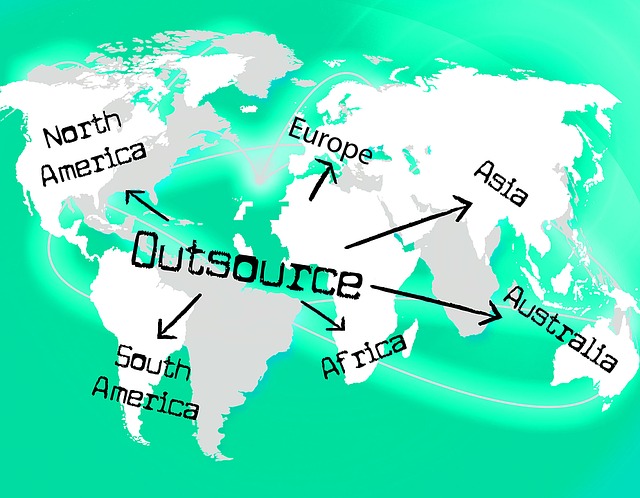
Outsourcing has numerous advantages for businesses that embrace it. It involves contracting outside parties for various practices instead of assigning tasks to other staff or hiring new employees. In the long run, a business becomes successful because it can save on operational costs as it streamlines operations and focuses on more important functions. Some of the reasons why it is a key ingredient for business success are:
As your business grows, there is an increase in functions. Some are core, while others are not. More focus on non-core functions when there is additional workload causes the business to suffer. By outsourcing non-core functions in such a scenario, employees focus on core functions to give quality output while third parties deal with the primary tasks.
Controls and lowers operational costs
In departments where costs rise over time, outsourcing ensures there are better management and control over costs. For example, you can have managed IT services through outsourcing, which ensures that you stay under budget when there are many projects and not enough personnel.
Outsourcing reduces the need to purchase new equipment and look for new locations when in need of more office space due to an increase in the number of employees. In comparison to the cost of hiring more personnel, expanding the office space, or relocating, outsourcing is by far the less expensive option.
Increases internal efficiency
Outsourcing allows you to make efficient use of internal staff when a third party shares their workload. Where you have large projects in a business, they may require skills that your employees do not have. Bringing in new contractors in your location to work beside your staff, your employees can gain new skill sets by learning from them.
Provides better risk management
Through outsourcing, you share any risks that may occur with your third-party partners. This way, you can reduce your burden. For example, outsourcing to a competent partner will reduce the risk of having the same task done by an employee who is not skilled in that area. When there are high levels of inconsistency and uncertainty, outsourcing provides continuity, thereby contributing to business success.
Promotes growth and business continuity
Outsourcing gives you the advantage of running your business 24/7, especially if it is online. Even when your employees go home after their 9 am to 5 pm shift, your outsourcing partners can keep working. Where there are critical and urgent tasks, they are available to perform and send them for review as soon as possible. With outsourcing, there will be hardly any concerns or absenteeism that will cause inconveniences, hence promoting continuity.
Where some overhead costs are very high but performing them will promote more customer satisfaction, outsourcing is an excellent option to evade high costs and inefficiencies.
Bottom line
If you're looking to grow your business, you can outsource for business success. Outsourcing has benefits such as promoting growth and continuity, providing better risk management, improving focus on core activities, increasing internal efficiency, and lower operational costs.